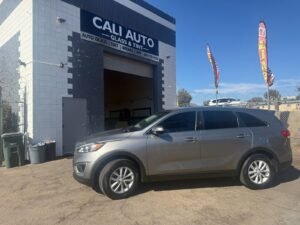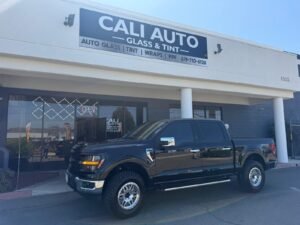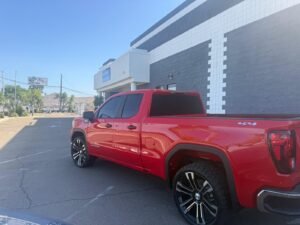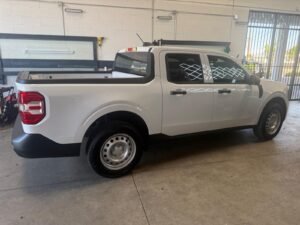

Dark tint changes how much visible light passes through your windows; it does not, by itself, tell you how well a film rejects heat or blocks UV. Choose the shade for visibility and appearance, then compare the specifications of the exact film and check its suitability for each window.
For El Cajon and San Diego drivers, the useful question is which film meets your comfort, visibility and budget needs. At Cali Auto Glass & Tint, you can discuss ceramic and 3M window tint options, review current tint packages and starting prices, or call (619) 710-6128 with your vehicle details.
What does dark or light window tint actually mean?
Visible light transmission, or VLT, describes how much visible light passes through a material or glass-and-film combination. A lower VLT looks darker. The number on a film label is not always the final reading on your vehicle because the existing glass also affects light transmission.
Compare samples with the windows closed, and ask whether a specification describes the film alone or a tested glass-and-film combination. A photo of another car cannot establish the exact shade or installed product.
Does darker tint block more heat or UV?
Not necessarily. Some lighter, high-performance films provide heat and UV protection without a very dark appearance. For example, 3M describes its Crystalline series as offering better heat and UV protection than many darker films. That is a product-specific example, not a claim that every light film outperforms every dark film or that a particular product is currently in stock.
When comparing quotes, ask for the exact film series and its technical information. VLT describes visible light; total solar energy rejection describes solar heat performance; UV rejection describes UV protection. These figures answer different questions and should not be treated as interchangeable percentages.
When a darker shade may suit your preferences
A darker appearance may appeal if you want less visible cabin detail or a stronger contrast with the bodywork. Privacy varies with lighting and viewing conditions; tint is not a security barrier and does not make valuables safe to leave on display.
The trade-off is reduced visible light through that window. Consider night driving, parking, reversing and poorly lit roads before choosing a shade. Do not choose darkness solely because you expect it to deliver the best heat protection.
When a lighter shade may suit your preferences
A lighter appearance can suit drivers who prefer a more open view or want to retain more of their vehicle’s original look. If heat or UV protection is your priority, compare the available film specifications instead of assuming a lighter film provides only modest protection.
A lighter-looking film is not automatically legal for every window. Suitability depends on the product, existing glass, window position and applicable requirements.
Check the rules for each window
Front side windows, rear windows and the windshield should not be treated as one interchangeable tint package. Before installation, discuss the requirements for each window and the finished glass-and-film combination. Refer to California Vehicle Code section 26708 for the statutory requirements. A shade name or a photo is not proof of compliance.
Five questions to ask before booking
- Which exact film series is included in the quote?
- Which windows are covered, and is the windshield included or separate?
- How do the available shades compare on my existing glass?
- What do the product specifications and written warranty cover?
- What preparation and aftercare does this installation require?
Common questions about dark and light tint
Is ceramic tint always dark?
Ceramic describes a type of film technology, not a single shade. Ask which shades and film series are available for your vehicle.
Can two cars look different with the same film?
Yes. Existing glass, cabin colour, lighting and the size of the windows can change the appearance. Compare samples rather than choosing from a photograph alone.
Which shade should I choose if I drive at night?
Prioritise a clear view through the relevant windows. Explain your driving conditions to the installer and compare suitable options before deciding; darker is not automatically better.
Compare window tint options at our El Cajon shop
Cali Auto Glass & Tint installs automotive window film at 1325 Magnolia Ave, El Cajon, CA 92020. Bring your vehicle’s year, make and model, and explain which windows you want tinted. The team can discuss available options and provide a vehicle-specific quote.
Review window tint prices, explore ceramic and 3M tint, or call (619) 710-6128 to discuss your vehicle.