
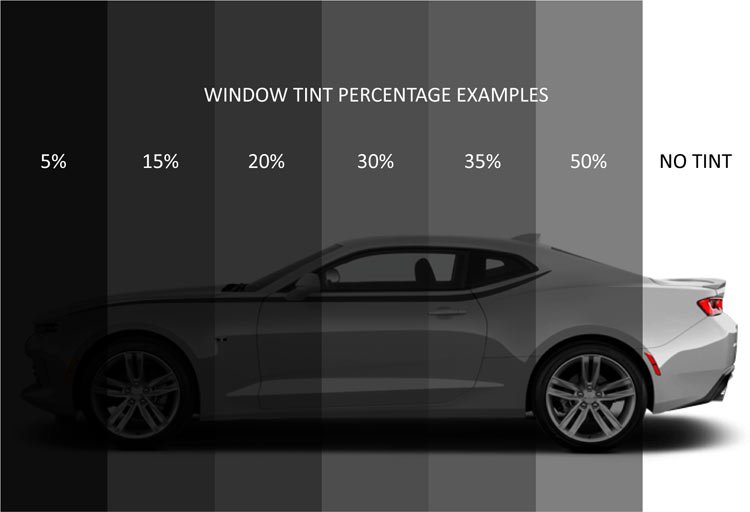
The California sun is brutal. It fades your dashboard, bakes your leather seats, and turns your car into a sauna. It’s no wonder so many drivers turn to window tinting for relief. But that powerful desire for privacy and heat rejection runs head-first into one of the strictest legal codes in the nation.
Are you unknowingly driving with illegal tint? The reality is that the most common tint percentage—even light tint—can land you a costly fix-it ticket in California.
Near El Cajon? We install California-legal tint at our shop on Magnolia Ave, with two windows starting at $79. See our window tint prices or call (619) 710-6128.
This guide, brought to you by the certified experts at Cali Auto Glass & Tint in El Cajon, CA, will break down the essential California window tint laws 2025, so you can get the protection you need without risking your hard-earned money.
1. California Legal Tint Percentage Breakdown by Window
The state of California uses a simple, yet often confusing, metric: Visible Light Transmission (VLT). This is the percentage of light that must pass through your glass and the film combined. If your factory glass already lets through 78% of light, applying a 20% VLT film will make the combined VLT illegal. Always remember: the law measures the final result, not just the film’s rating.
1.1. Front Side Windows: The Critical 70% VLT Limit Explained
This is where nearly all drivers get it wrong. The law mandates that your front driver and passenger side windows must allow at least 70% VLT.
- The Nuance: Since most modern car glass has a slight factory tint (often 75%-85% VLT), applying anything darker than a very light, clear-view film (like 80% to 90% VLT ceramic film) will almost certainly push the combined VLT below the 70% legal limit. This is why professional measurement by a shop like Cali Auto Glass & Tint is non-negotiable.
1.2. Windshield Tint Rules: Where is the AS-1 Line?
For the windshield, the law is extremely restrictive:
- Tint is only permitted on the top four inches of the windshield, measured from the top edge.
- The material must be transparent, colorless, and non-reflective. This area often corresponds to the AS-1 line marked on the glass by manufacturers.
- Recommendation: This is the perfect location for a clear ceramic window tint strip to cut down on solar glare without violating the law.
1.3. Rear Windows and Back Side Windows: The No-Limit Zone
This is the only area where you have creative freedom:
- Any darkness is allowed on the rear side windows and the rear window. You can go for the maximum privacy offered by a 5% or 20% VLT tint.
- Safety Requirement: If you choose to tint your rear window, California law requires your vehicle to have functional side mirrors on both the driver and passenger sides to ensure adequate rear visibility.
2. Prohibited Tints: Avoiding Illegal Tint Colors and Reflectivity in California
Compliance isn’t just about VLT; it’s also about the physical properties of the film.
2.1. Why Red, Amber, or Blue Tint Colors are Strictly Illegal
To prevent confusion with emergency and law enforcement vehicles, California law strictly prohibits tint films that are red, amber, or blue in color on any window. Neutral colors like black, smoke, or gray are generally acceptable, provided they meet VLT and reflectivity requirements.
**2.2. Metallic and Mirrored Films: The Reflectivity Limits CA
Mirrored or highly reflective films are a major citation risk. Your window tint cannot be more reflective than standard, untinted factory glass.
- SEO Tip: If you want maximum heat rejection without the mirror look or legal risk, ask your installer for a nano-ceramic window tint. These films use non-metallic particles to reject heat (IR) without causing reflectivity issues, making them the best legal choice for the California sun.
3. Special Situations: Medical Exemption Window Tint California Process
If you or a passenger suffer from a medical condition that requires protection from the sun’s UV rays (like Lupus, melanoma, or severe photosensitivity), California provides an exemption. This addresses a key long-tail informational query.
**3.1. Qualifying for a Window Tint Medical Exemption (Form REG 256A)
To obtain the exemption, you must:
- Obtain a signed letter or certificate from a licensed physician or dermatologist in California, stating the medical necessity.
- Complete the Miscellaneous Certifications (Form REG 256A) from the California DMV.
- Keep the signed document in your vehicle at all times.
3.2. Medical Tint Rules: The Remaining Restrictions
Even with an exemption, you are not exempt from all rules. The tint must still be clear, colorless, and transparent, though you may be allowed a darker VLT. Always confirm the final acceptable limit with your physician and the DMV before installation.
4. Penalties and Enforcement: Dealing with a Window Tint Ticket California
Ignorance is not a legal defense. Officers are equipped with VLT meters and often run targeted enforcement stops.
4.1. The VLT Meter and the Initial “Fix-It” Ticket
For a first offense, you will typically receive a “fix-it” ticket (officially a Correctable Violation).
- Cost: While the base fine is low (around $25), mandatory court fees and administrative costs can push the total window tint ticket California price close to $200.
- Action: You must remove the illegal tint, have a law enforcement officer or authorized station sign off that the violation is corrected, and submit the proof to the court by the deadline.
4.2. Escalating Fines for Repeat Violations and Non-Compliance
Failure to correct the issue or repeat violations can lead to much higher fines, court appearances, and potentially affect your vehicle registration renewal. It’s far cheaper and less stressful to get it right the first time.
5. The Compliance Solution: Cali Auto Glass & Tint in El Cajon
In a state with laws this strict, professional installation that prioritizes compliance is your only safe bet.
5.1. How We Guarantee Legal Tint Installation Every Time
At Cali Auto Glass & Tint in El Cajon, CA, our process is built around avoiding that dreaded ticket:
- We use a certified VLT meter to check the actual VLT of your factory glass before applying any film.
- We use this baseline measurement to calculate the maximum VLT film you can apply while staying above the 70% VLT limit.
- We provide the manufacturer’s compliance certification sticker, which is required by California Vehicle Code §26708, and can be helpful proof in case of a traffic stop.
5.2. Our Recommended Legal Film: High Heat Rejection Ceramic Tint
We specialize in non-metallic Ceramic Tint. This film provides up to 98% Infrared (IR) heat rejection—far superior to traditional dyes—while remaining fully compliant with CA legal tint percentage and reflectivity rules. It’s the ultimate combination of legal safety and comfort under the California sun.
6. California Tint Law FAQs
- Q: Is 35% tint legal in California on any window?
- A: Yes, but only on the rear side and rear windows. It is illegal on the front driver and passenger windows, as 35% VLT is far below the 70% minimum.
- Q: Can I tint my entire windshield in CA?
- A: No. You are only allowed a non-reflective strip on the topmost four inches (AS-1 line).
- Q: What is the fine for illegal window tint in California?
- A: The total cost of a first-offense “fix-it” ticket, including fees, is typically around $197. Repeat offenses are higher.
- Q: Does ceramic tint interfere with my radio or GPS in California?
- A: No. Since ceramic film is non-metallic, it will not interfere with any electronic signals (GPS, satellite radio, cell phones, or FasTrak transponders).
Keep in mind that California law also heavily regulates overall windshield visibility. If you have a massive crack spanning across your driver’s line of sight, your vehicle can be cited regardless of your tint. We provide fast, mobile windshield replacement in El Cajon to ensure your vehicle remains 100% street legal, safe, and ready for the road.
7. Conclusion: Don’t Guess, Get Legal.
The heat and sun damage in California are real problems that quality window tinting solves. The challenge is ensuring your solution is 100% compliant with California window tint laws 2025.
Don’t settle for a questionable installation that leaves you constantly looking over your shoulder for law enforcement. Invest in a professional service that guarantees compliance and uses the best technology—like ceramic film—for real comfort. For a legal, guaranteed-compliant install, book your auto window tinting in El Cajon.
Take the first step toward a cooler, legal ride.